Field Notes · 23 May 2026 · 6 min read
Phosphogypsum for Saline and Alkaline Soils — A Field Guide
White patches on the soil surface. Crusty bare spots where nothing grows. Stunted, yellowing crops at field margins. These are sodic-soil symptoms — and phosphogypsum is the cheapest, fastest correction in the farmer's toolkit.
What is phosphogypsum?
Phosphogypsum is calcium sulphate dihydrate (CaSO₄·2H₂O) — chemically the same as mineral gypsum, but with traces of phosphorus, sulphur and other nutrients carried over from the fertilizer manufacturing process. It is sold as a fine off-white powder or granule.
It is not a fertilizer in the NPK sense — it is a soil conditioner. Its job is to fix what is wrong with the soil so that whatever fertilizer you do apply actually works.
How it reclaims sodic soil
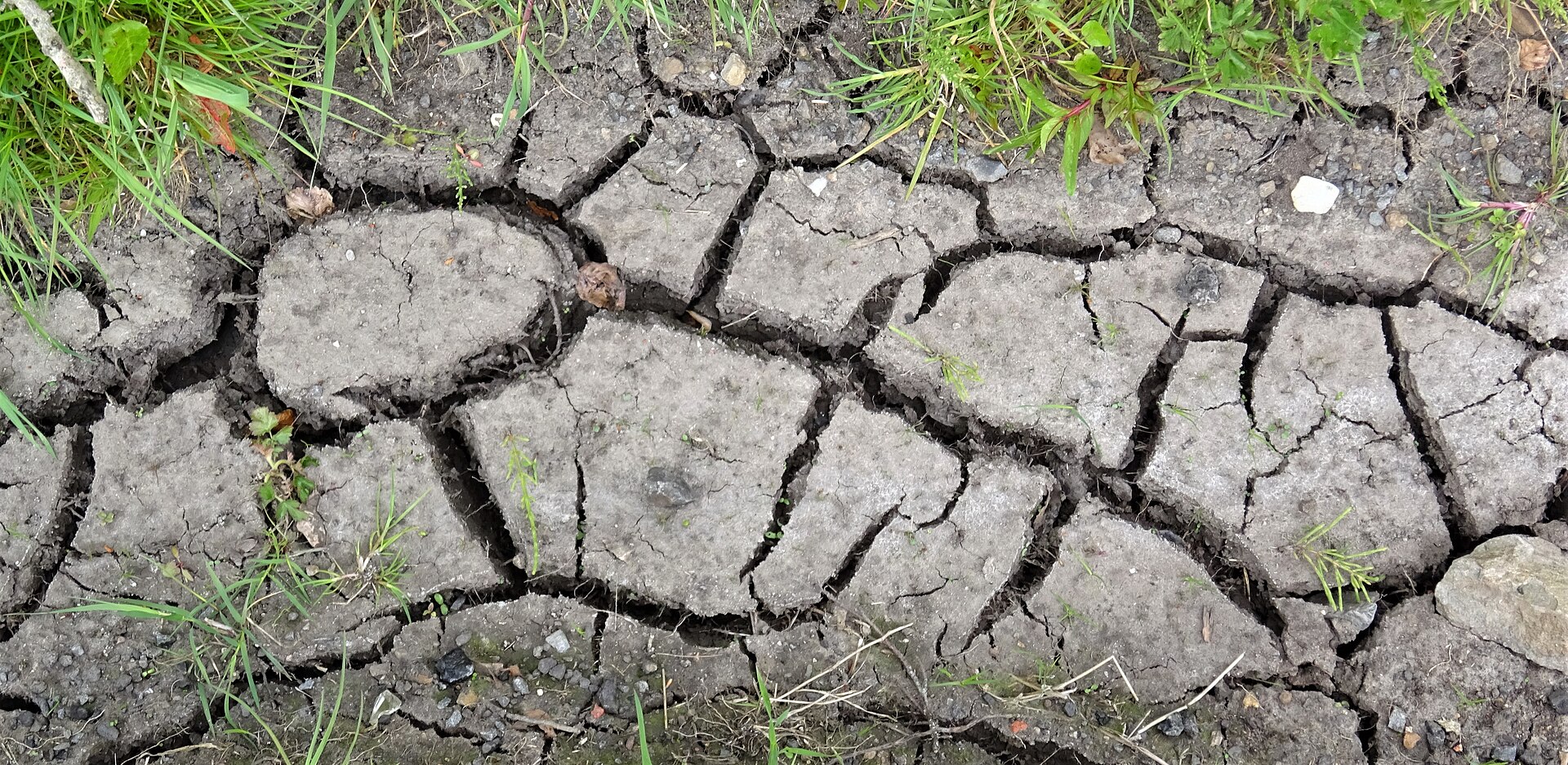
A sodic soil is one where sodium ions (Na⁺) dominate the exchange sites on clay particles. Sodium causes clay to swell shut, blocking water infiltration and root penetration. The visible symptom is a hard, slick crust and patches where rainwater stands.
Phosphogypsum delivers calcium ions (Ca²⁺). Calcium is more strongly attracted to the clay than sodium is — it displaces the sodium, which then leaches downward with the next irrigation or rain. The displaced sodium combines with sulphate (SO₄²⁻) from the gypsum to form Na₂SO₄, which is highly water-soluble and washes out of the root zone.
Visible symptoms of sodic / saline / alkaline soil
- White or grey crusts on the soil surface after irrigation dries
- Bare patches where nothing germinates, surrounded by stunted growth
- Soil that puddles instead of absorbing water; hard pan after drying
- Yellow or pale crops despite normal NPK applications
- pH consistently above 8.0, EC above 4 dS/m, or ESP above 15%
Application rates
Rates vary with the severity (measured as Exchangeable Sodium Percentage, ESP) and soil texture. As a starting point:
| Soil condition | Rate (per acre) | Frequency |
|---|---|---|
| Mildly sodic (ESP 10–15%) | 200–400 kg | Once per year |
| Moderately sodic (ESP 15–25%) | 500–800 kg | Every season for 2 years |
| Severely sodic (ESP > 25%) | 1000–1500 kg | Every season for 3 years |
| Maintenance (after reclamation) | 100–200 kg | Once every 2 years |
Get a soil test before heavy application. Most agricultural universities and KVKs offer ESP and EC testing for under ₹200. Without it you are guessing at the rate.
How to apply
- Apply 15–20 days before sowing or after harvest of the previous crop
- Broadcast uniformly over the soil surface
- Incorporate into the top 10–15 cm with a cultivator or harrow
- Irrigate heavily within 7 days — the leaching irrigation is what carries away the displaced sodium
- Do not mix with urea or ammonium sulphate in the same application — wait at least 7 days
What to expect, year by year
| Year | Visible change | Yield response |
|---|---|---|
| Year 1 | Better water infiltration, crusts soften | 10–20% yield lift on previously stunted patches |
| Year 2 | Bare patches start producing, pH drops 0.3–0.5 | 20–40% lift on whole-field basis |
| Year 3 | Soil structure normalises, root depth increases | Yield approaches non-sodic benchmark |
| Year 4+ | Maintenance dose only | Stable |
Phosphogypsum vs alternatives
| Material | Speed | Cost / acre | Best for |
|---|---|---|---|
| Phosphogypsum | Moderate (weeks) | ₹ | Sodic & saline-sodic soils |
| Mineral gypsum | Slow (months) | ₹₹ | Same — but slower dissolution |
| Elemental sulphur | Slow (3–6 months) | ₹₹₹ | Calcareous alkaline soils only |
| Sulphuric acid | Fast (days) | ₹₹₹₹ | Industrial reclamation only |
Phosphogypsum is the most cost-effective option for sodic soil in 95% of Indian situations. Elemental sulphur is better only when the problem is high pH with free lime but no sodium issue — and even then it takes 3–6 months to act.
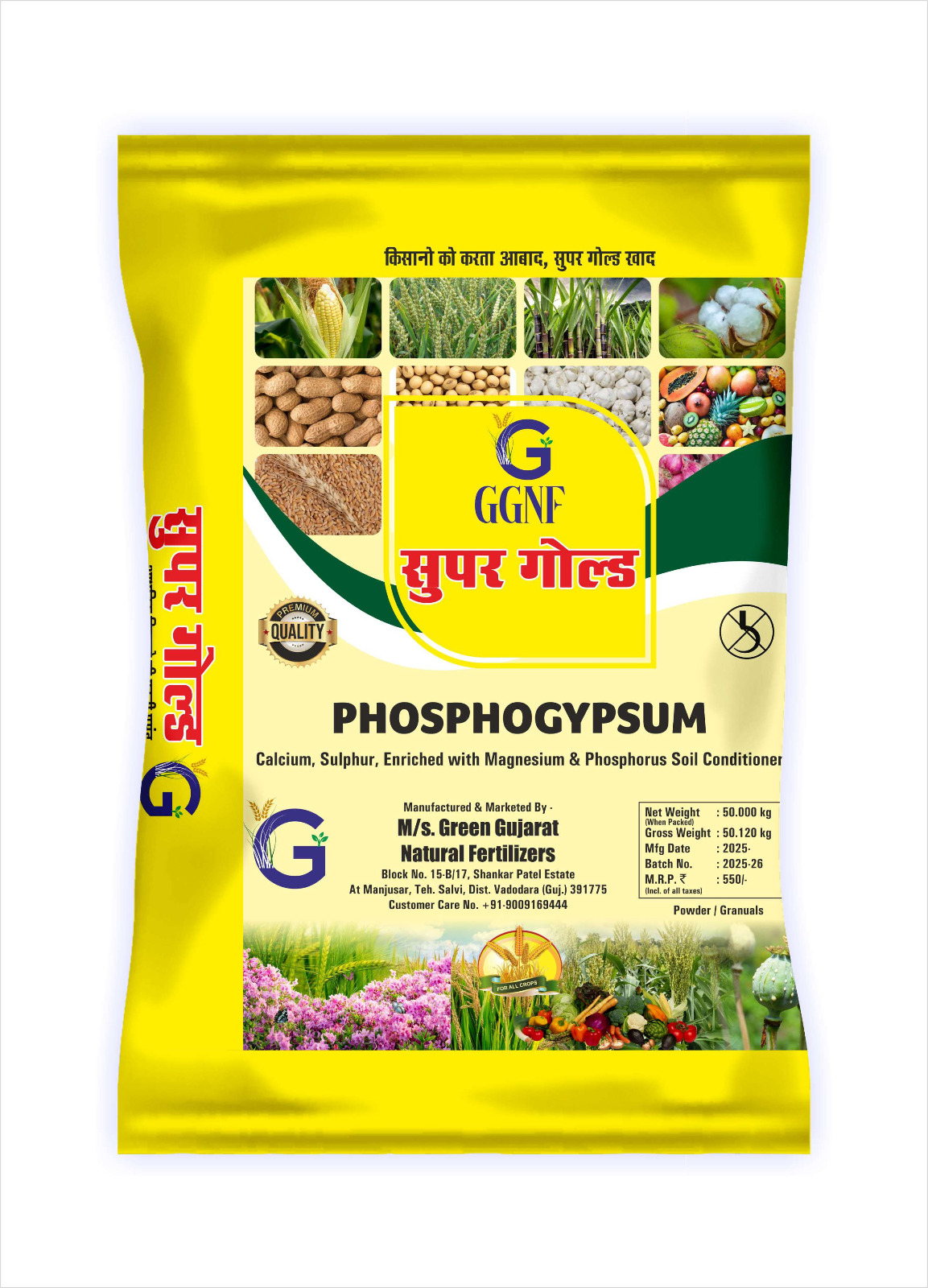
Our phosphogypsum-based soil conditioner — packed for direct field application:
Bottom line
If you have patches where crops refuse to grow, white crusts after irrigation, or chronically poor response to NPK, get a soil test. If ESP comes back above 10%, phosphogypsum is almost certainly the right intervention — cheaper, faster, and more reliable than the alternatives.